Can Solar Panels be Installed on a Garden Room?
Estimated reading time 12 minutes
Looking to add a garden room into your home but want to ensure it operates eco-friendly? You may be wondering, can solar panels be installed on a garden room?
Yes, solar panels can be installed on a garden room, and in most cases you won't need planning permission to do it. In England, most garden room solar panels count as permitted development, provided they stay within a few simple size limits and your home isn't listed. That makes the planning side fairly straightforward. The questions that really decide whether solar is worthwhile are practical ones…can the roof carry the weight, which way does it face, and how will the power reach your house?
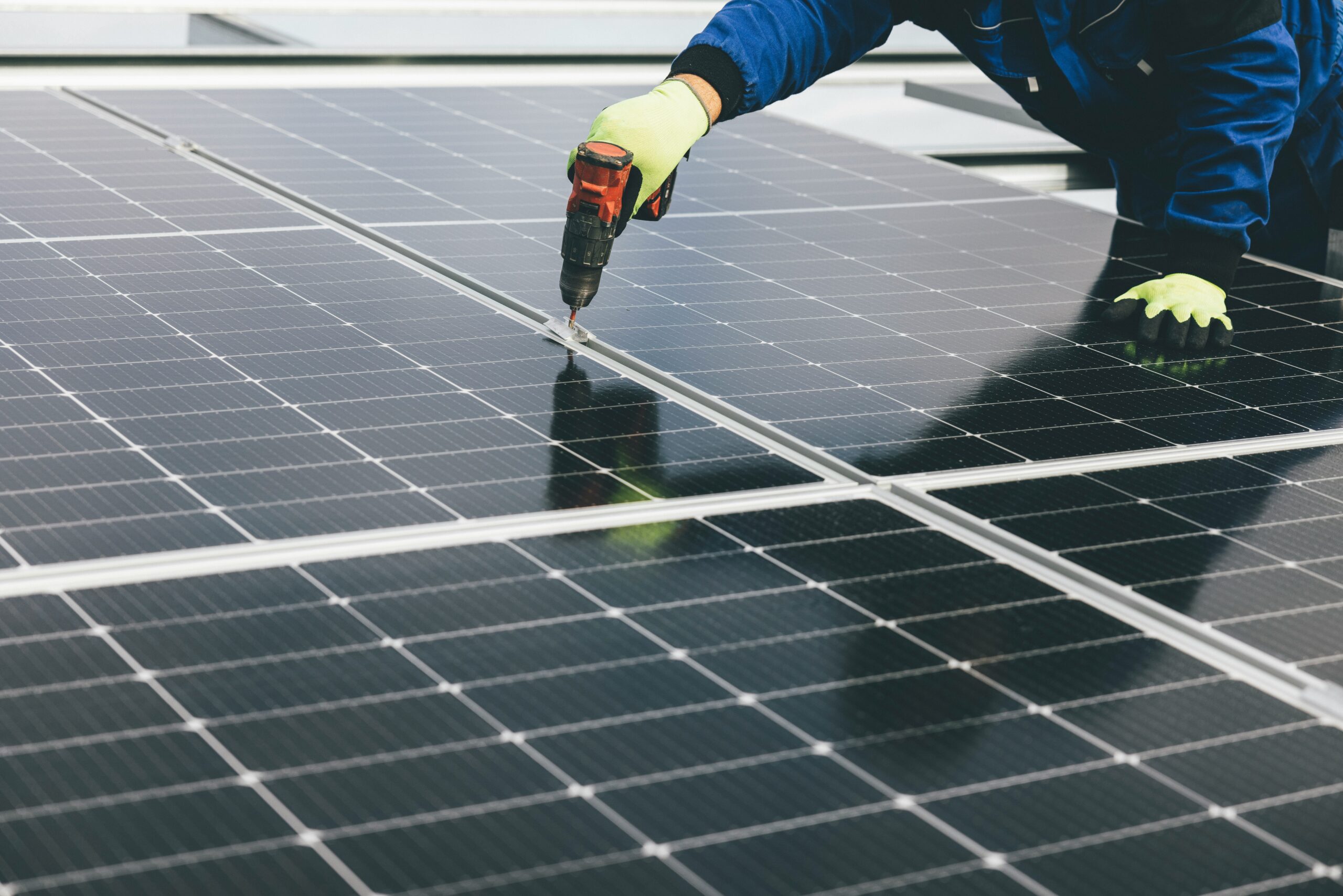
Solar panels for garden room roofs are a natural fit for many of the buildings we design, so learn more about the process in this guide.
Do you need planning permission for solar panels on a garden room?
In most cases, no. In England, the permitted development rules for domestic solar cover panels fitted to "a building situated within the curtilage of a dwellinghouse", which is the legal way of describing a building in your garden, such as a garden room. As long as your installation stays within those rules, you can go ahead without submitting a planning application.
The main limits relate to how far the panels project from the roof. On a pitched roof, they can't stick out more than 0.2 metres from the roof slope or rise above its highest point. Flat roofs are a little more generous, as the highest part of the panels can sit up to 0.6 metres above the highest part of the roof. That allowance matters if you'd like the panels tilted towards the sun on frames, because the angle of the frame can quickly use up that height.
Where you live matters too. If your house is
- a listed building, panels on any building in its grounds will need permission, and the same applies on sites designated as scheduled monuments
- in a conservation area or World Heritage Site, panels shouldn’t go on a wall facing a road. Roof-mounted panels are still allowed, but if the roof is flat, there's one extra step to take first.
- on other protected land, including National Parks and National Landscapes: before installing, you must ask your council whether it wants to approve how the panels look. That's worth bearing in mind if you live within the South Downs National Park or the High Weald National Landscape.
Beyond those limits, the rules simply ask that panels are positioned, as far as is practical, to minimise their effect on the building's appearance and the surrounding area, and that they're removed once they're no longer needed. According to the Planning Portal's guidance on solar equipment, there is a transition period until the 27th of August 2027, during which you can follow either the previous rules or the new ones. Some councils remove permitted development rights through what's known as an Article 4 direction, so a quick check with your local authority is always sensible.
Of course, the panels are only half the picture. Your garden room has its own rules on size, height and position, which we explain in our guide on whether you need planning permission for a garden room. If you'd like written confirmation that the whole project is lawful, a certificate of lawful development gives you that peace of mind.
Building regulations, MCS and notifying the grid
Not needing planning permission doesn't mean there are no rules at all. For garden rooms with solar panels, three other checks come into play, and a good installer will take care of each of them for you.
- Building regulations. Building regulations for solar panels normally apply to roof-mounted panels. That means confirming two things: that the roof can safely carry the extra weight and wind load, and that the electrical work is safe. Installers registered with a government-approved competent person scheme can self-certify their work, so you won't usually need to make a separate application to building control.
- Certification. If you'd like to be paid for the electricity you send back to the grid, both your installer and the installation need to be certified under the Microgeneration Certification Scheme (MCS) or an equivalent. This is a requirement of the Smart Export Guarantee, and you'll also need a smart meter that records your exports.
- Letting your local electricity network operator know about the system. Smaller systems, up to 16 amps per phase (around 3.68kW on a standard single-phase home supply), follow a simple "connect and notify" route, while anything larger needs approval before it's switched on. As the Nation Grid’s G98 connection guidance makes clear, that limit covers all the generating equipment at your property combined.
So, if your house already has solar panels or a battery, adding a second system to your garden room could tip you into the longer approval process, which is something to check before you get a quote.
Is a garden room roof suitable for solar panels?
A well-built garden room roof can make an excellent home for solar panels! It's low, easy to reach and often sits in an open part of the garden. Whether yours is suitable comes down to a few things, starting with the structure itself.
Panels and their mounting frames add weight, and the roof also has to resist the wind trying to lift them. Our garden rooms are built using the same methods as traditional timber-frame houses, so the structure can be designed to take this load from the outset. With a lightweight summerhouse or flat-pack building, that's far less certain.
Next comes orientation. South-facing roofs generate the most electricity, while east- and west-facing panels still work well but produce a little less. North-facing roofs are rarely worthwhile. A flat roof gives you more flexibility, because the panels can be angled towards the sun on frames, provided they stay within the 0.6-metre height limit we covered earlier.
Shade deserves careful thought, too. Garden rooms tend to sit towards the bottom of the garden, near trees, fences or neighbouring buildings, and even partial shade across part of a panel can noticeably reduce its output. That's why an installer will look at how shadows fall through the day and across the seasons before recommending a layout.
Finally, there's the size of the roof. A typical domestic solar panel measures roughly 1.7 metres by 1.1 metres, so as a rough guide, a 5m x 4m garden room roof could hold around six to eight panels, depending on the layout and any spacing needed on a flat roof. That works out at roughly 2.5kW to 3.5kW of solar. Whatever the size, every fixing and frame needs to be detailed so it doesn't compromise the roof's waterproofing, which is far easier to get right during the build than to retrofit later.
Should the panels power the garden room or your whole home?
Once you know the roof is suitable, the next decision is where the electricity goes, and the answer often surprises people. In most cases, the best approach is to connect the panels to your home's main electricity supply, rather than treating the garden room as a separate system.
The reason for this is simple, as a garden office with a laptop, lighting and a heater uses relatively little power, so a system serving only that room would often produce more than it needs. Connected to the house instead, every unit of solar electricity can be used wherever there's demand, whether that's the washing machine, the fridge or the garden room itself, and anything left over can be exported to the grid. The cable that runs from the house to power your garden room can be sized to suit.
Adding battery storage takes this a step further. A battery stores daytime solar for use in the evening, when most households use more electricity, so it suits families who are out during the day but use the garden room after work. A fully off-grid setup is possible for a very simple building, but we rarely recommend it for a room you'll use all year round. UK winter output is low, so you'd need a large battery or a backup supply to keep things running.
Solar becomes even more appealing if you're planning a higher-energy space, such as a garden sauna room, home gym or even a dedicated golf simulator. These rooms can draw a lot of power, and generating some of it yourself helps to offset the running costs.
Plug-in solar panels
On the 27th of August 2026, the UK Government announced that plug-in solar panels are legal across Great Britain. These kits plug into an ordinary socket, produce up to 800W and, according to the government, could save a household up to £110 a year. For flats and rented homes, they're a welcome option.
For a timber garden room, though, they're rarely the right fit. The updated planning rules in England exclude plug-in solar from permitted development where any part is installed on a wooden wall or on an exterior clad in timber. Even where they can be used, an 800W cap is a fraction of what a properly designed roof system can generate. For most garden rooms with solar panels, a hardwired system fitted by an accredited installer is the safer and more productive choice.
How much do solar panels for garden rooms cost?
The cost depends on the size of the system, how it's mounted, the length of the cable run back to your house and whether you add a battery. As a benchmark, government figures published with its plug-in solar consultation put the median installed cost of small solar systems (up to 4kW) at £1,595 per kilowatt in 2025/26. On that basis, a 3kW system would come to roughly £4,800 before any extras.
Smaller systems do tend to cost more per kilowatt, because costs such as labour, the inverter and the electrical connection don't shrink with the number of panels. That's one more reason to make the most of the roof space you have!
There are two ways to improve the numbers. Solar panels and battery storage installed at homes are currently zero-rated for VAT, and according to the HMRC's VAT guidance on energy-saving materials, this applies until the 31st of March 2027, after which a reduced 5% rate is due to apply. Once your system is up and running, the Smart Export Guarantee means energy suppliers will pay you for any surplus electricity you send to the grid. Rates vary between suppliers, so it's worth comparing them separately from your import tariff.
Remember, too, that the panels sit on top of the cost of the garden room itself. Our garden room price guide is a good starting point for budgeting the building, and we can then price solar into the same project.
Why it pays to plan garden room solar panels early
You can add solar to an existing garden room, but building it into the design from the beginning is simpler, neater and usually cheaper. When we know solar is part of the plan, we can size the roof structure for the panels and wind loads from day one, rather than checking or strengthening it later. We can also shape and position the roof to face the sun, while keeping the building within its own planning height limits.
The same thinking applies below ground and behind the walls. Cable ducts can be laid during the groundworks, so the connection back to the house is hidden and doesn't mean digging up a finished lawn or patio. The electrics can be planned with space for an inverter, a battery if you want one and spare capacity in the consumer unit. The roof covering can also be detailed around the mounting system, so weatherproofing is designed in rather than patched in afterwards.
Planning ahead also means working with one joined-up team. Timber Rooms already handles all the internal electrics in our garden rooms, and our sister company, TR Energy, works alongside us on solar PV and battery storage. You get a single point of contact for both the building and the energy system, with no gaps between trades.
Frequently asked questions about solar panels on a garden room
Can I add solar panels to an existing garden room?
Often, yes. The key check is whether the roof structure can take the extra weight and wind load. A well-built, insulated timber-frame garden room is a much better candidate than a lightweight shed or summerhouse.
Do solar panels on garden room roofs need building regulations approval?
Building regulations normally apply to roof-mounted solar, covering the roof structure and the electrical work. An installer registered with a competent person scheme can self-certify, so you won't usually need to apply to building control yourself.
How many solar panels can fit on a garden room?
It depends on the roof size and layout. As a rough guide, a 5m x 4m roof could hold around six to eight standard panels, giving roughly 2.5kW to 3.5kW of solar.
Can solar panels power a garden room all year round?
Not on their own. Solar output in the UK drops sharply in winter, so most garden rooms stay connected to the mains. The panels reduce how much electricity you buy, rather than replacing your supply entirely.
Are solar panels for garden room projects worth it?
For a well-oriented, unshaded roof, they can be a sensible long-term investment, especially if you use a lot of electricity during the day. The best way to find out is to have the site assessed, as orientation, shading and your household's usage all affect the return.
Planning a garden room with solar panels? Let's talk!
So, can solar panels be installed on a garden room? Absolutely, and in most of England they won't need planning permission. What separates a system that performs well from one that disappoints is the roof structure, orientation, shading and how the power reaches your home, and all of that is easiest to get right at the design stage.
Our team can assess your garden, explain what's possible on your property and design solar panels for garden room roofs as part of one bespoke project. Book a free site survey or call us to talk it through.
Try our garden room configurator for an instant indicative price, or browse our garden room case studies for inspiration.



Not sure what your garden room would cost?
Configure the size, cladding and finish online and get an indicative price in minutes.