How to Protect Outdoor Timber Buildings in Your Garden
Estimated reading time 9 minutes
The best way to protect an outdoor timber building is to keep water out, block UV light and stay on top of maintenance. That means starting with properly treated timber, designing the building so rain runs off rather than sitting on it, and choosing a finish that suits how you want it to look.
Whether you have a summerhouse, a garden office or a sauna, the same principles apply. This guide explains how to protect timber outside in your garden, what actually causes wood to deteriorate, and the simple checks that keep a timber building looking good for years.
What damages outdoor timber?
Moisture is the main threat to garden timber, with sunlight a close second. Here’s what can damage outdoor timber:
Moisture and fungal decay
Wood rot is caused by fungi, and fungi need water. According to the Wood Protection Association's guidance on preservative treatments, the risk of attack rises significantly once the moisture content of wood goes above 20%. That can happen through constant exposure to rain, poor installation, a lack of maintenance or persistent condensation and damp.
Sapwood, the outer part of the tree, is always vulnerable to fungi and insects. Today's softwood is also more likely to contain a high proportion of sapwood than timber used in years gone by, which is why treatment matters so much.
UV light and greying
Sunlight breaks down the surface of wood over time. Wood photodegradation research from 2024 explains that lignin, the natural polymer that binds wood fibres together, is highly susceptible to UV radiation. As it degrades, the surface discolours and roughens.
On uncoated timber, this is what produces the familiar silver-grey colour. Greying on its own is largely cosmetic, but a weathered, roughened surface takes on water more readily and holds finishes less well.
Movement and splitting
Timber swells as it absorbs water and shrinks as it dries. Repeated wetting and drying can open up small cracks, particularly at the end grain, which then let more water in. Keeping moisture levels stable is one of the simplest ways to prevent this cycle.
How to protect timber from water
The most effective way to protect timber from water is to stop it getting wet in the first place, and to let it dry quickly when it does. Good design does far more here than any coating you brush on later.
Keep it off the ground
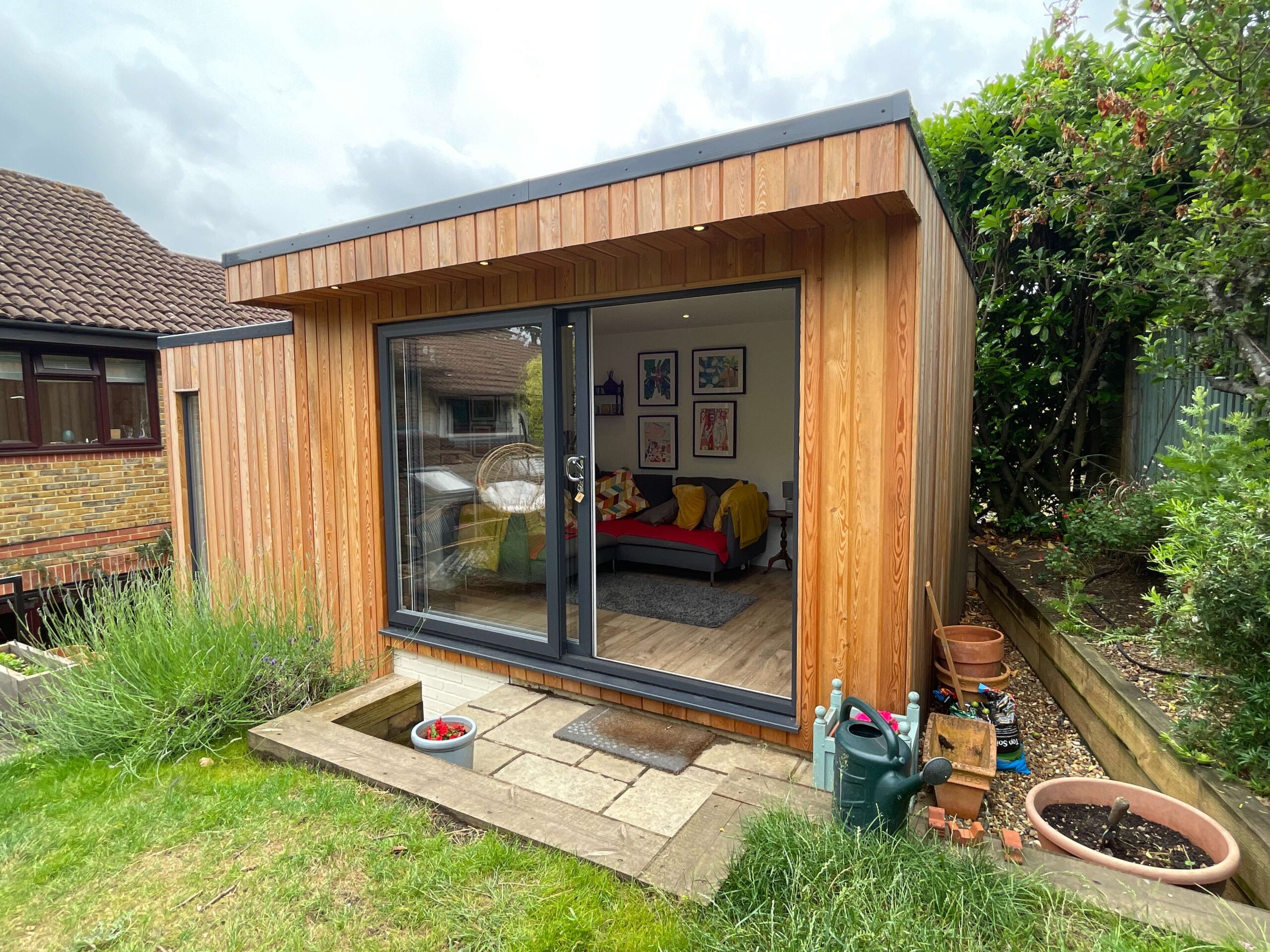
Timber that sits on soil, grass or a patch of standing water stays damp for long periods. A garden building should sit on a properly prepared base with the timber raised clear of the ground. Keep soil, bark chippings and plant pots away from the bottom of the walls, and trim back any shrubs that trap moisture against the cladding.
Shed rainwater away from the walls
Roof overhangs, gutters and downpipes all keep rain off the walls and away from the base. Check that water from the downpipe is carried well away from the building rather than splashing back onto the lower boards. Wherever water can pool, such as on a flat sill or the top of a horizontal board, there is a higher chance of decay.
Let the timber breathe
Cladding is usually fixed onto battens so there is a small air gap behind it. This lets any water that gets behind the boards drain away and helps the timber dry out between showers. Avoid blocking this gap at the top or bottom with soil, decking or sealant.
Seal the end grain
The cut ends of boards soak up water much faster than the face. When building or repairing, seal any cut ends, notches or drill holes. The Wood Protection Association advises that cut ends of pre-treated timber should always be re-treated with an end-grain preservative to maintain protection.
At Timber Rooms, our garden rooms are built using the same methods as traditional timber frame houses, so these details are considered from the design stage rather than added afterwards.
How can you protect timber for the long term?
If you want to know how to protect timber for the long term, the answer starts before a single board is fixed. Softwood used outdoors should be pre-treated with preservative to the correct level for where it will be used.
In the UK, the British Standard for wood preservation, BS 8417, works alongside BS EN 335 to group treated timber into Use Classes. The three most common are:
| Use Class | Where it's used | Typical garden building examples |
| Use Class 2 | Indoors, above ground, kept dry | Internal framing and roof timbers |
| Use Class 3 | Outdoors, above ground | Cladding, fascias, deck boards |
| Use Class 4 | In contact with the ground or fresh water, or providing exterior structural support | Ground bearers, posts, decking substructures |
The Wood Protection Association is clear that timber in permanent ground contact, or providing exterior structural support, must be treated to Use Class 4. It also advises that if you're in doubt, you should move up to the higher class.
Why brush-on preservative isn't enough on its own
Brush, dip and spray-applied preservatives offer a degree of protection. However, for service lives of 15, 30 or 60 years, typically only timber pre-treated by an industrial process, such as vacuum-pressure impregnation, provides the level of protection required. Brush-on products are best used to top up cut ends and repairs, not as a substitute for proper pre-treatment.
If you're buying a garden building, it's worth asking your supplier which Use Class the timber has been treated to for each part of the structure.
How to protect timber from weather and UV
To protect timber from weather and sunlight, choose a finish that suits the look you want and the time you can give to upkeep. There are three broad approaches, each with its own trade-offs.
| Approach | How it looks | What it protects against | Upkeep |
| Let it weather naturally | Turns silver-grey over time, often unevenly | Relies on treatment and good detailing, not the surface | Least work, but colour is uncontrolled |
| Penetrating oil or stain | Natural wood grain stays visible | Water repellence and some UV protection | Light, regular top-up coats |
| Paint or opaque film-forming stain | Solid colour | Strong UV and water protection while intact | Less frequent, but needs preparation when it starts to crack or peel |
Choose pigment for UV protection
Because UV attacks the lignin at the surface, a finish needs something to block the light. Pigmented stains and paints generally protect better than clear finishes, which can let UV through to the wood beneath. If you prefer a natural look, a lightly tinted oil or stain is usually a better choice than a fully clear one.
Apply finishes in the right conditions
A finish only works if it bonds properly. Apply it to clean, dry timber, avoid damp or frosty days, and follow the manufacturer's guidance on drying times and the number of coats. Sides of the building that face south or take the brunt of the weather will usually need attention sooner than sheltered ones.
Maintenance routine for timber buildings
A little regular care is the easiest way to protect timber outside over the long term. Small problems caught early are quick to fix, while neglected ones can lead to replacement boards. Here’s what you should consider:
Spring
- Wash down the cladding with a soft brush and mild soapy water to remove dirt, algae and pollen. Avoid harsh chemicals and high-pressure jets, which can damage the surface.
- Check the finish for fading, cracking or peeling, paying most attention to the sunniest and most exposed walls.
- Recoat any areas that need it once the timber is clean and fully dry.
Autumn
- Clear leaves and debris from gutters, downpipes and the roof.
- Cut back plants and move anything leaning against the walls before winter.
- Make sure water drains away from the base and isn't pooling around the building.
Throughout the year
- Look for soft spots, splits or dark staining, especially low down and around doors and windows.
- Re-treat any exposed or damaged end grain promptly.
- Keep an eye on seals around glazing and doors, and replace any that have perished.
Protect your timber building from day one
Knowing how to protect timber comes down to three things: the right treated timber, good design that keeps water moving away, and a finish you maintain. Get those right and an outdoor timber building can stay sound and attractive for many years!
The easiest time to build in that protection is before the building goes up. Every Timber Rooms garden room is designed and built by our team, and comes with a 10-year structural guarantee as standard.
Whether you're planning a home office, gym, sauna or entertaining space, explore our types of garden rooms to find the right fit for your garden.
Get in touch with us today to discuss your vision.
Frequently asked questions about protecting timber buildings
How often should I treat a timber garden building?
It depends on the finish. Oils and penetrating stains usually need topping up more often than paint, which lasts longer but needs more preparation when it starts to fail. Inspect the building at least once a year and follow the finish manufacturer's recommended recoat interval.
Does pressure-treated timber still need painting or staining?
Pressure treatment protects against rot and insects, but it doesn't stop UV greying or give the surface water repellence. A paint, stain or oil adds that extra layer and lets you control the colour. Any cut ends should still be re-treated with an end-grain preservative.
Is grey timber rotten?
No. Greying is a surface change caused by UV light breaking down lignin, and on its own it isn't decay. Rot shows up as soft, crumbly or spongy wood, often low down or where water collects.
Can I stain over timber that has already gone grey?
Yes, but the weathered surface needs preparing first. Clean it thoroughly and lightly sand back to sound wood, then let it dry fully before applying the new finish. Check the product's instructions, as some require specific cleaners for weathered timber.
What's the best way to protect timber from rain over winter?
Focus on drainage and airflow. Clear the gutters, make sure water runs away from the base, keep plants and soil off the walls and fix any damaged finish before the wet months arrive.


Not sure what your garden room would cost?
Configure the size, cladding and finish online and get an indicative price in minutes.